The Professional Lunch Guide: How to Get the Most Out of It, No Forced Networking
How to prepare for, enjoy, and follow up on a KOZ lunch without ever pulling out a business card.
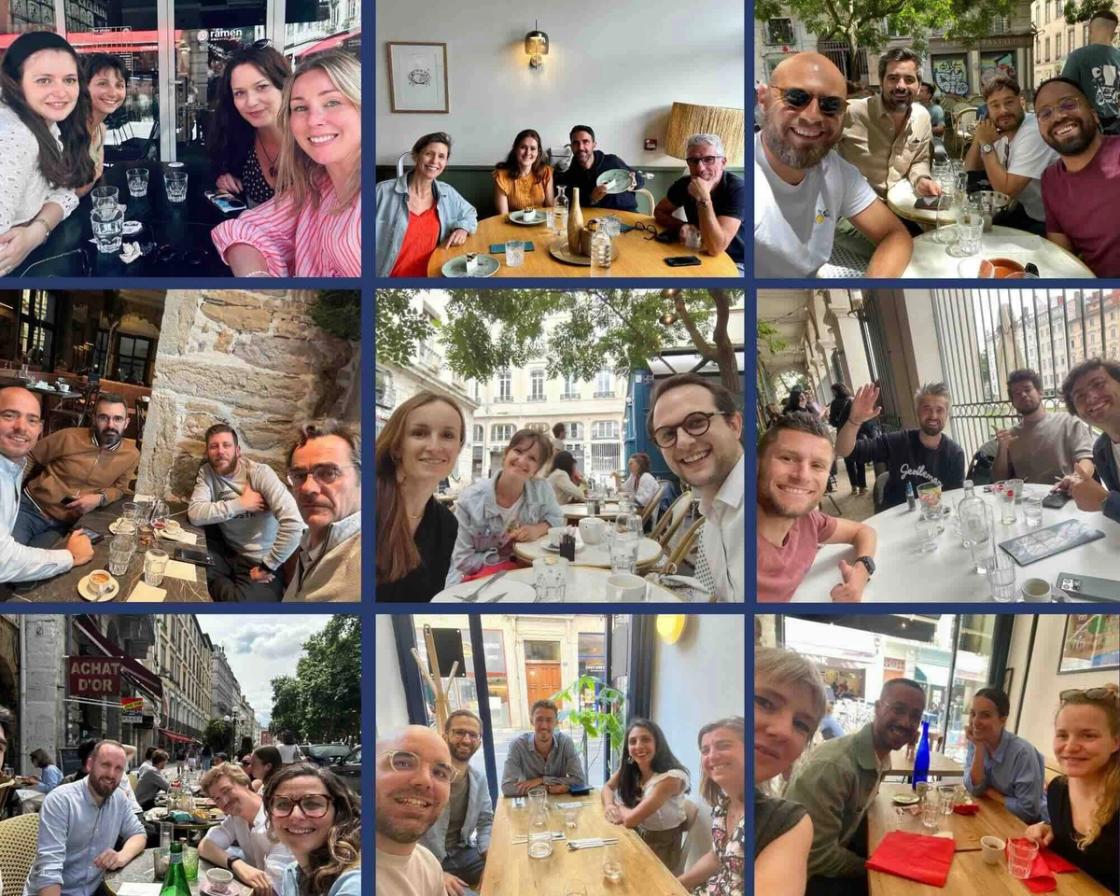
A KOZ lunch has nothing to do with an afterwork mixer where you drift from group to group, phone in hand. It's a real meal, at a real table, with 4 to 6 people who actually have a reason to talk to each other. Here's how to get the most out of it, from matching to the bill.
Why a table of 4 to 6 beats a 40-person mixer
A typical networking event crams 40, 60, sometimes 100 people into one room: a drink in hand, a badge round your neck, and a conversation that dries up after three minutes because the person you're talking to is already scanning the room for the next business card to collect. You leave with a stack of contacts... and not one conversation you actually remember the next day.
The dynamic changes completely around a table of 4 to 6. Too few people, and any lull feels awkward if there's no real connection. Too many, and the group splits into two or three side conversations, with half the table tuning out. Between 4 and 6, everyone has room in the conversation: nobody dominates, nobody disappears into the background.
And there's nothing to perform. No badge, no booth, no opening keynote, no queue at the buffet. Just lunch, at lunchtime, with people who have a real reason to talk. That's the whole difference between an event you endure and a lunch you look forward to.
How KOZ builds your table
KOZ doesn't throw strangers together in a room at random. It starts with a short form: your role, your context, what you're looking for right now, your energy. One minute, no more. You then pick a date in your city, on the slot that works for you, and you can still change it up to three days out.
Matching happens around 72 hours before lunch: an algorithm cross-references the profiles registered in your city (role, context, needs, energy) and builds tables of 4 to 6 people with a genuine reason to meet. A human checks every table before it goes out. Nobody ends up at a table by chance, and nobody gets an unchecked automated email.
Around the table, you'll find a bit of everything: founders, managers, freelancers, executives, C-level profiles. The job title barely matters: what matters is the match. Tables are built so the people at them have a real interest in meeting each other, not just in crossing paths. That's the work behind the matching satisfaction we measure: 92,7 %.
How to prepare: what to say, what to skip
There's no deck to prepare, and that's deliberate. You get the restaurant address, the time, and your tablemates' first names 48 hours before lunch, not sooner. The point isn't to arrive with a rehearsed pitch, but with genuine curiosity about the people you're about to meet.
What works
Ask about the other person's context instead of running through your own background on a loop. Talk about what you're actually working on, doubts, grey areas, the real stuff: it's almost always more interesting than a polished pitch. Let the conversation wander: a table of 4 to 6 has plenty of room for topics that have nothing to do with work, and that's often where the best exchanges happen.
What to skip
The sales pitch before the starters arrive. Speed-dating-style business card collection. A twenty-minute monologue about your company that leaves no room for anyone else. KOZ builds tables for real conversations, not to hand you leads. Showing up in sales mode throws the whole table off balance, for you and for everyone else.
How to follow up without turning transactional
The best follow-up doesn't feel like a follow-up. If a conversation stuck with you, send a short, specific message, a precise reference to something the person actually said, rather than a booking link pasted into your signature the next morning.
Leave room, too, for nothing to come of it. Not every KOZ lunch is meant to turn into a partnership, a deal, or a hire. Some of them just stay a good lunch and a conversation you don't forget, and that's completely fine. That's the whole point of anti-networking: talk first, see what naturally follows, without forcing it.
What it costs, and the cancellation policy
Joining a table costs 11,99 €: that's the price of your seat, no subscription, no commitment. The meal itself is settled separately, directly with the restaurant, exactly like any lunch with colleagues.
Something comes up at the last minute? We offer a new date or a refund, your choice. If you cancel after 48 hours, you get a 50 % promo code to rebook later. No small print, no surprise fees.
See you at the table?
KOZ builds tables in 17 cities across France and Switzerland: Paris, Lyon, Bordeaux, Marseille, Grenoble, Nantes, Lille, Saint-Étienne, Geneva, Lausanne, and more. Over 30,000 professionals are already registered. The form takes a minute, there's nothing to sign, and you'll know fast when you're actually having lunch.
Frequently asked questions
What if I need to cancel?
We offer a new date or a refund, your choice. If you cancel after 48 hours, we send you a 50 % promo code to rebook a date.
What if someone doesn't show up?
We run a no-show tracking system that filters this out: we're under 3 % unannounced no-shows. We also systematically seat two tables at the same restaurant, so they can merge if needed.
What kind of professionals show up at the table?
A bit of everything: founders, managers, freelancers, executives, C-level profiles. The job title barely matters: what matters is the match. Tables are built so the people at them have a real interest in meeting, not just in crossing paths.
How does the matching actually work?
You fill out a one-minute form (role, context, what you're looking for, your energy). The AI cross-references profiles and proposes combinations. A human checks it before it's sent. Nobody ends up at a table by chance.
Can I come if I don't know anyone?
That's the whole point. Everyone arrives without knowing each other. You only get the others' first names 48 hours before.